will warnock
london, ukMy Dumb Phone Experiment
For 30 days in Jan/Feb 2026 I put my SIM card into a “dumb” phone as an experiment. Below are some scrambled observations, thoughts and reflections of how the experiment went.
Background
For a while now I’ve wanted to try the “dumb phone” thing - swapping my iPhone 14 Pro for a lump of plastic that can’t do much more than make calls and send texts. The real appeal for me to do this has been to see how I live my life when I’m more intentional with what I pay attention to. Recently, I’ve found it far too easy to watch a show, movie or go on social media to avoid being bored, and come away having spent a lot more time than I’d intended. So this “experiment” is to see how my behaviour changes when I’m separated from my phone.
I’m certainly not throwing my iPhone away though. I’ll still need it to check on apps occasionally, access my bank account and for 2FA codes. I just won’t have my iPhone with me as often as I do now, and when I do it won’t have a sim card in it, so I can’t use mobile data on the go. My goal is to get back to using it as a tool to benefit my life, rather than it feeling like it’s got more control over me.
Over the summer I did some short spells of leaving my phone at home when I went out. After a couple times of reaching into my pocket and finding nothing when I was bored, something clicked in my head and I started to think differently. This felt like the fog was lifted and made me more present in what I was doing, and with the people around me.
The Plan
The plan was to leave my iPhone at my desk at the end of each work day. Between 5pm and 8:30am the next day I only had access to my dumb phone and was therefore only reachable by text or phone call. When I got into the office, I quickly checked my notifications, then used my phone sparingly during the day as I typically would in the office.
I hoped not having access to my iPhone at home would make me feel like I had more time away from the office, and that I’d be more intentional with how I spent my time. If I really wanted to check something I could dig up my old personal laptop - but there were no algorithmic feeds on that. I would have to be very intentional about what to consume.
The Phone
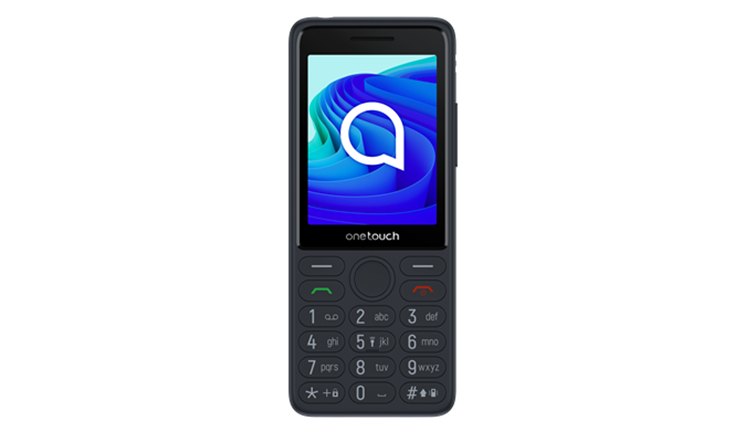
On January 18th 2026 I purchased the TCL Onetouch 4042S 4G for NZ$69. My first reaction while unboxing was that it sucks. It’s bigger than I thought, it’s ugly and it feels strange - but then that’s kind of the point. My flatmates tore into me for looking like I’m using a burner phone. I quickly realised managing the social side of using this thing isn’t something I had considered.
Checking in after a week
At the end of each day I spent some time jotting down my observations, thoughts and challenges relating to using my new phone. Some of these were what I expected at the start, but others were more surprising.
The first factor that I had not considered - and became apparent very quickly - was the social tornado that being seen using this phone was. When people saw me use it they were in disbelief, pulling a face of shock and utter confusion. Some people were curious to hear about why I was using it, fewer still respected it as an interesting idea, but most people just thought I was crazy. They couldn’t even begin to understand why I would choose to restrict myself from the creature comforts of modern life. It was all fair enough though. I didn’t set out on this trial to change anyone’s mind or preach of a better way of living. I was being selfish and doing this for me, because I wanted to make a change.
The results do speak for themselves though. Going from 25 hours of screen time per week down to 5 felt like a windfall of extra time in my week.
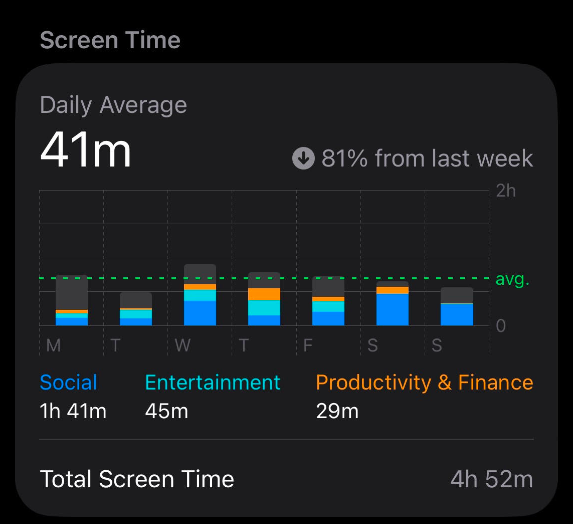
So what did I spend this extra time doing? Well the answer is a lot of life admin that I’d been putting off, a little bit more work than a typical week, watching some sport and doing a major amount of exercise. I’ve probably over-corrected and leaned too far into exercise as something to fill the boredom with. Week one showed me that my issue wasn’t explicitly my phone, it was how I spent unstructured time.
Weeks 2-4
After the first week concluded I really just settled into this being my reality. Getting into the office and checking my phone for what I missed the night before felt more akin to checking the mailbox like I used to as a kid. I had a couple of friends comment to me that they appreciated when I’d ring them and ask something, as opposed to just back and forth texts. This was really just me being so painfully slow at typing on the brick that a call was always the easier option. But maybe there’s a loose end to chase there, are phone calls a lost way of connecting that we do less in favour of shallower, more frequent messages? I’ll leave that for another day.
After I’d got through a lot of the admin that had piled up, it became less obvious what to do with the extra couple hours I felt that I had after work. Just relaxing, doing nothing, felt quite odd as I thought I should be spending my time better - even though I didn’t know what “better” looked like. I went on more walks, read more pages of books I hadn’t touched in months and did more cooking. These are all great outcomes that just naturally surfaced out of wanting to fill my time before going to sleep.
Where it ended
This was always an experiment with an aim of trying it for a month. I’m happy to say I just about made it to the finish line and came away with some good discoveries. Before coming into this I’d read many posts online describing the non-negotiables that people missed when daily driving a dumb phone, and I quickly found out what those are for me.
| What | Why? |
|---|---|
| Messaging apps | I sometimes missed the boat on time-sensitive asks if someone reached out through a messaging app. It also became overwhelming at times to catch up on group chats that I was very late to. |
| Spotify | I missed the suggestions for new music that Spotify gives. The radio app was a fun novelty for a while, hearing the host segments, new music and daily quizzes. But after a while I couldn’t stand the ads any longer and most stations were just playing the same songs week in week out. |
| Note taking / reminders | I realised how often I jot something down or create reminders in my phone. After many attempts at holding something in memory and then forgetting by the time I could action it, I made sure to have a pen and paper on me so I could take notes. |
| Banking | If someone asked me to pay them back I couldn’t do it immediately. This was slightly alleviated by carrying the pen and paper. |
| There were so many times I wanted to know something, and I’d usually be able to with a quick google search but couldn’t. Some examples: - How far of a drive is it to X? - Being in a store and looking up alternative products - Following sports results |
|
| Camera | I could ask someone else to take a photo and then send it to me if I really wanted to capture a moment, but if I was ever by myself I did notice I was missing the chance to capture something. |
In retrospect all of these could be overcome, and they obviously weren’t such non-negotiables as I lived without them for a month. It’s more that cutting off access to each of these just reduced convenience in my life by a touch. Combining them all together, it made the day-to-day just a bit more difficult and I’m sure if I carried on I would have found more areas where my living was just harder.
Takeaways
Pulling the brick phone out in front of people always sparked a conversation about why I was doing it, and frequently a broader conversation about screen time. I learned that for most people it’s a non-issue. I am likely in an echo chamber where I think it’s a bad thing, but most people do not.
It’s clear looking back that this approach is just one extreme way to reduce phone screen time. Restricting my access to my phone meant my phone screen time didn’t go up, but I for sure was watching more TV and using my laptop more during this time. The experiment highlighted to me that the area I need to manage most is what to do with unstructured time. In those big blocks of time where I have no plans, I naturally came up with better ideas of how to spend it when all I had was my brick phone.
I’d next like to try an additive approach where I add new things into my life to fill the unstructured time where I’d reach for my phone. I think this will be a more sustainable approach towards spending my time more intentionally. In the coming years I’d hope I can say this experiment was a sort of catalyst towards pointing me to more conversations, books, plans and activities - aka living.